
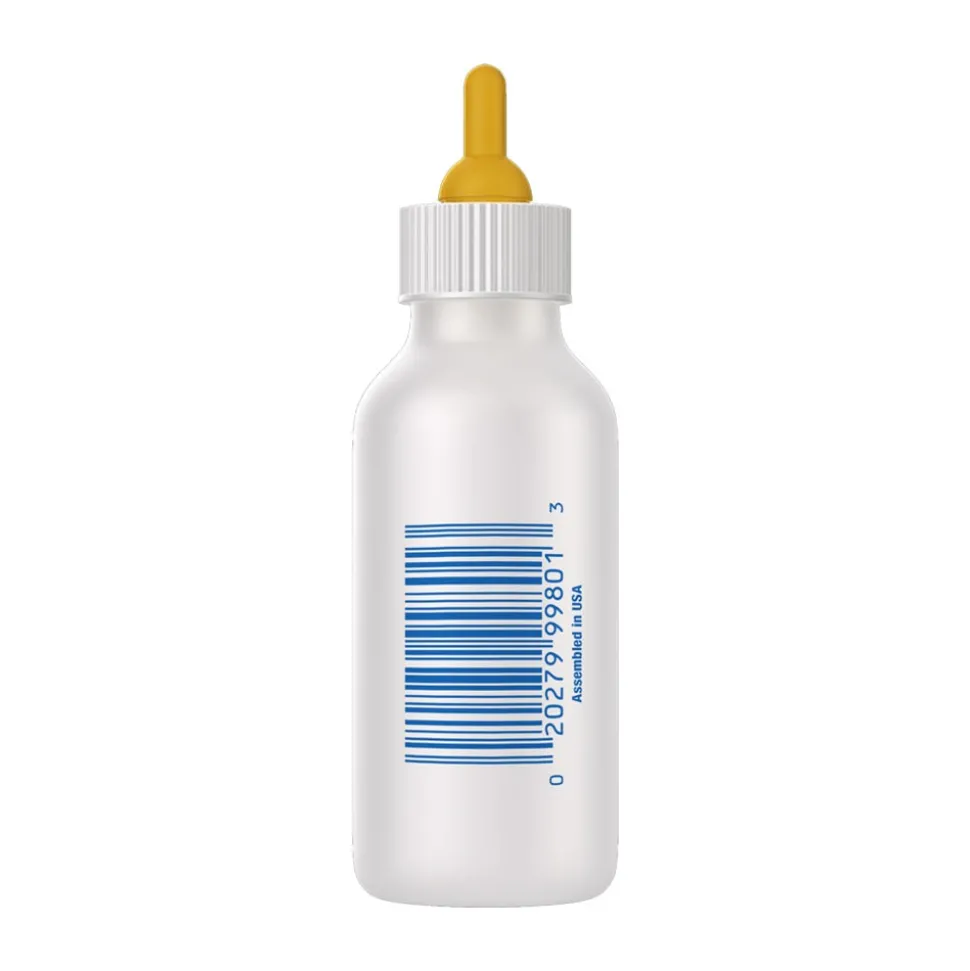
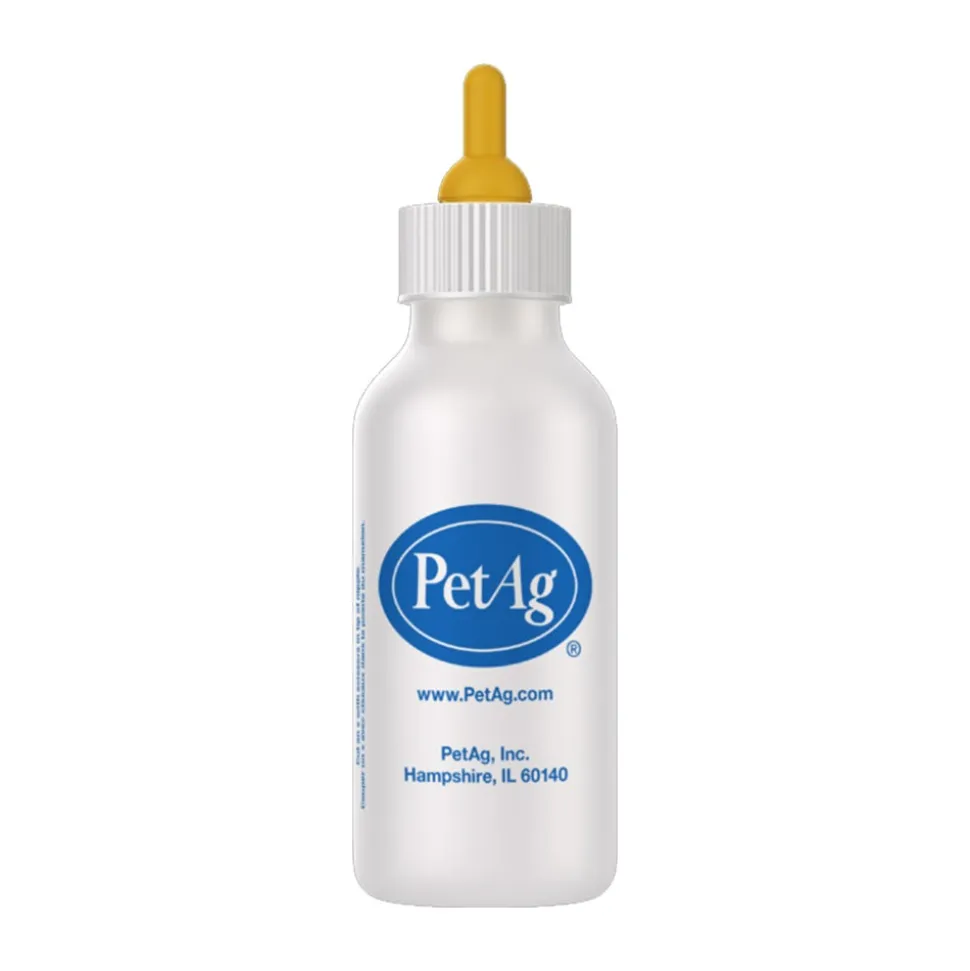
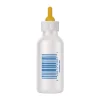
PetAg Animal Nurser Bottle for Puppies, Kittens & Small Animals 2-oz
Original price was: 2,00 $.1,89 $Current price is: 1,89 $.
Product Highlights
• Supports natural liquid feeding
• Encourages healthy nursing action
• Markings help track feeding
• Durable for daily repeated use
• Soft latex-free silicone nipple
Give your little ones the gentle start they deserve with PetAg’s Nurser Bottle, a trusted choice among PetAg feeders for pets. Designed for small and large babies, this easy‑to‑use bottle lets them nurse naturally while you feed with confidence. It helps monitor intake, supports facial‑muscle development, and lets animals refuse when full so they don’t overfeed. Whether you’re hand‑raising newborns or caring for a fragile pet, PetAg’s Nurser Bottle is one of the best puppies feeders for stress‑free, mess‑minimal feeding that fits smoothly into your daily routine.
Key Benefits
- Promotes natural feeding of liquids for neonates.
- Nursing action develops facial muscles and stimulates saliva.
- Graduated markings help monitor intake and prevent misfeeding.
- Durable bottle withstands hard, repeated daily use.
- Latex‑free silicone nipple is flexible and readily accepted.
INGREDIENTS ANALYSIS
INGREDIENTS ANALYSIS
Bottles: high-quality material, durable enough to stand up to hard use.
Nipples: Constructed of durable, flexible silicon that is readily acceptable and latex-free.
Attributes & Specifications
Attributes & Specifications
Nurser bottle
flexible silicon
Latex-free
Natural feeding of liquids
Puppies, kittens, & Small animals
Durable & easy to clean
safety & precautions
safety & precautions
- Cut the cross-cut nipple carefully with a razor blade.
- Test nipple flow with water pressure.
- Use a separate bottle for ill animals.
- Wash the bottle and nipple after feeding.
- Consult a vet if the animal is too weak.
- Sterilize before and after use.
DIRECTIONS FOR USE
DIRECTIONS FOR USE
- Before use, make a hole in the nipple using one of the following methods: Cross-cut nipple with a razor blade.
- Using a strong needle or cuticle scissors, enter and exit the nipple tip as if making a very small stitch or snip, then pull the needle out, removing a small piece of the nipple.
- Check the flow with water.
- A steady drip or thin stream should be achieved when a slight pressure is applied to the nipple.
- If one or more animals are ill, use a different bottle or feed the ill animals last. Wash the bottle, cap, and nipple with hot soapy water and rinse thoroughly after each feeding session. If the animal is too small or weak to nurse, consult your veterinarian.
Be the first to review “PetAg Animal Nurser Bottle for Puppies, Kittens & Small Animals 2-oz”
Related products




Canned Food
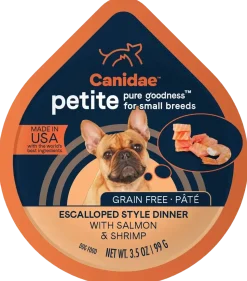
CANIDAE PURE Petite Goodness for Small Breed Grain-Free Paté Canned Dog Food Salmon & Shrimp 3.5-oz
Canned Food


Canned Food




Reviews
There are no reviews yet.